
About My Financial Equity
I was a teenager the first time I understood that money was freedom. I didn’t have language for it back then, I just knew that money was the one thing I could picture controlling when almost nothing else in my life felt like mine to control. So I spent a lot of time thinking about the future, about what money could do for me once it was actually mine.
The moment I turned 18 and moved away for college, I got a job and started building my credit. Two and a half years later I bought a used car with a loan I’d gotten on my own, at 4.14%. It wasn’t a big moment to anyone else. To me it was proof I could actually build something myself.
That instinct started even earlier than that, really. My introduction to money came from my grandma, garage sales, and the very real feeling of holding cash in my hand and deciding whether something was actually worth it. My grandma had a way of talking to my sister and me about saving and spending that never felt like a lecture. It felt like life. Those early lessons planted something in me that never really went away.
When I went to college at DMACC, I thought I was headed toward therapy or social work. I wanted to help people, that part was always clear. It wasn’t until I transferred to Iowa State University mid-degree that everything shifted. I stumbled onto the Financial Counseling and Planning minor and something clicked immediately. My favorite professor, Carolyn Steckelberg, was herself an Accredited Financial Counselor and introduced me to AFCPE. I remembered how much I had genuinely enjoyed budgeting as a teenager and thought, this is it. By the end of that semester the minor was added to my degree.
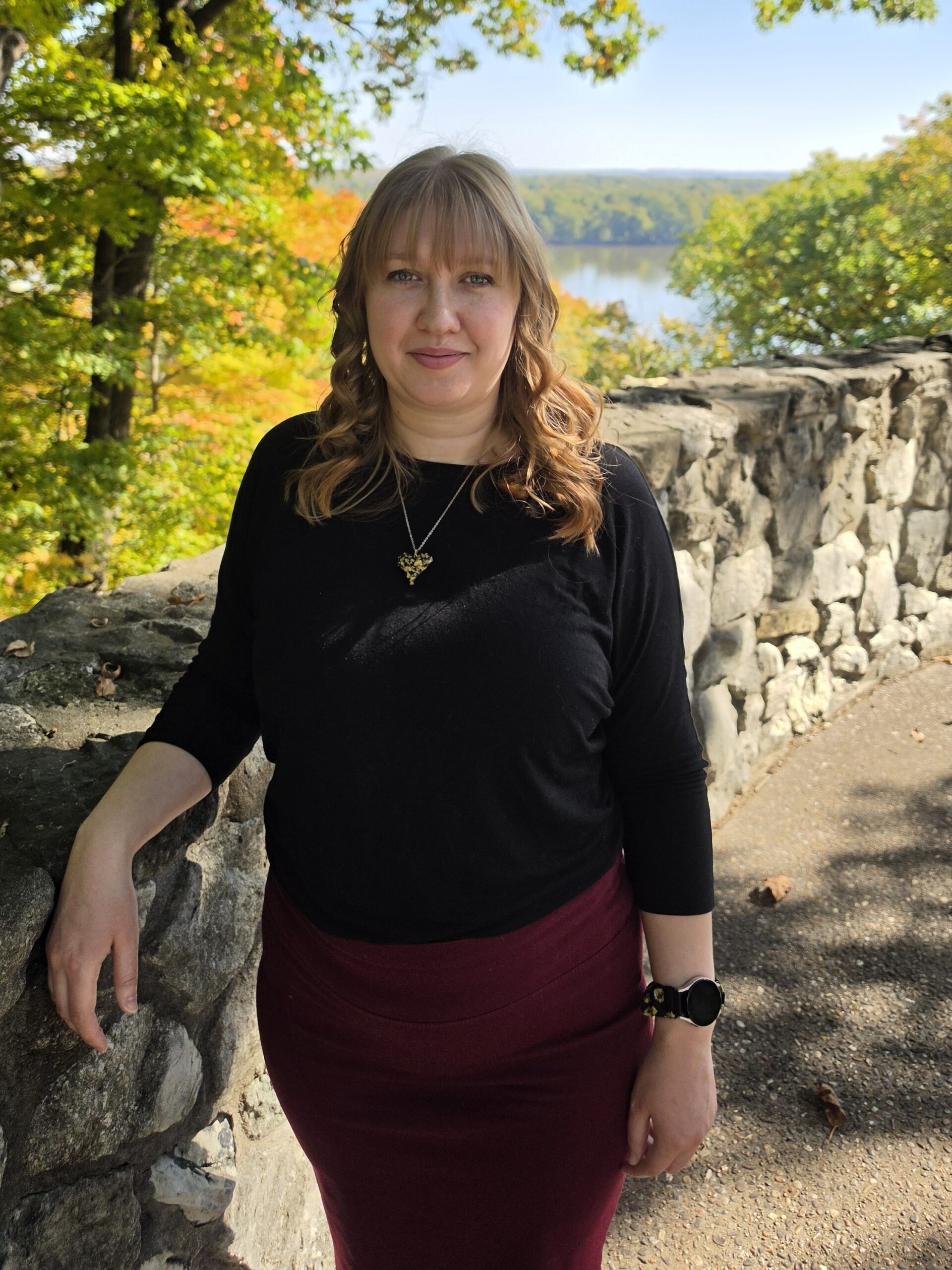

Why I Started My Financial Equity
What drew me to financial counseling was the combination of psychology and practicality. I had always been drawn to understanding how people think and feel, but financial counseling meant I could help people move toward something concrete, not just process pain. It felt bright in a way nothing else had.
I finished my BA in Psychology with minors in Financial Counseling and Planning and English from Iowa State. But life doesn’t wait for you to feel ready.
About a year and a half after graduation, I was fired from my job. At the time I was the sole financial support for myself and my husband, who was waiting on his work permit while we navigated the green card process. I watched my credit card balances climb. I fell into a depression. And I had to do some of the hardest work of my life, in therapy and on paper, to stop believing my debt balance said something about my worth as a person.
What pulled me through wasn’t a perfect system. It was knowledge, and it was choosing to steer instead of white-knuckle it. I looked at my actual credit history, saw the real picture instead of the story my anxiety was telling me, and made strategic moves forward. Slowly, things shifted. I stopped managing my finances from a place of panic and started building them from a place of control.
That experience didn’t make me doubt my path. It deepened it. Financial struggle doesn’t discriminate. It can find anyone, even someone who studied this, even someone who knew better. That’s exactly why real support matters, not just a spreadsheet.
My Credential and Commitment
In August 2024 I became an Accredited Financial Counselor, a credential that requires genuine education, examination, and professional standards. A month later I registered My Financial Equity as an LLC. Not because everything was perfect, but because I was ready to help people the way I had needed to be helped.
The AFC® credential is issued by the Association for Financial Counseling and Planning Education (AFCPE®) and holds me to ongoing professional and ethical standards. It’s not something anyone can claim overnight. It means that when you work with me, you’re working with someone who is both trained and accountable.


Who I’m Here For
I started this business for people who feel behind, overwhelmed, or ashamed about their finances. People who have tried to figure it out alone and haven’t been able to. People who are tired of managing their money from stress instead of steering it with confidence. People who need someone who actually gets it, not because I read about it, but because I’ve lived it.
If that’s you, you’re in the right place.
You don’t have to have it together to start. You just have to be willing to take the next step.
Financial goals cannot be fully achieved and financial well-being cannot be attained without considering the whole person and their relationships with others around them.
Bradley T. Klontz, Financial Therapy: Theory, Research, and Practice
Contact Me
You can send me comments, questions, feedback, and post requests here!